


Olympic Games
The Story of Kalos "Sport seeks out fear to overcome it, fatigue to triumph over it, and difficulty to defeat it." - Pierre de Coubertin During these luminous days of...

The duel, often viewed today as a barbaric relic of the past, once served a very specific social function. Established to regulate and limit individual violence, it represented a form of contractual justice in which adversaries agreed upon the terms of combat, thereby settling their dispute within the bounds of a shared sense of honor.
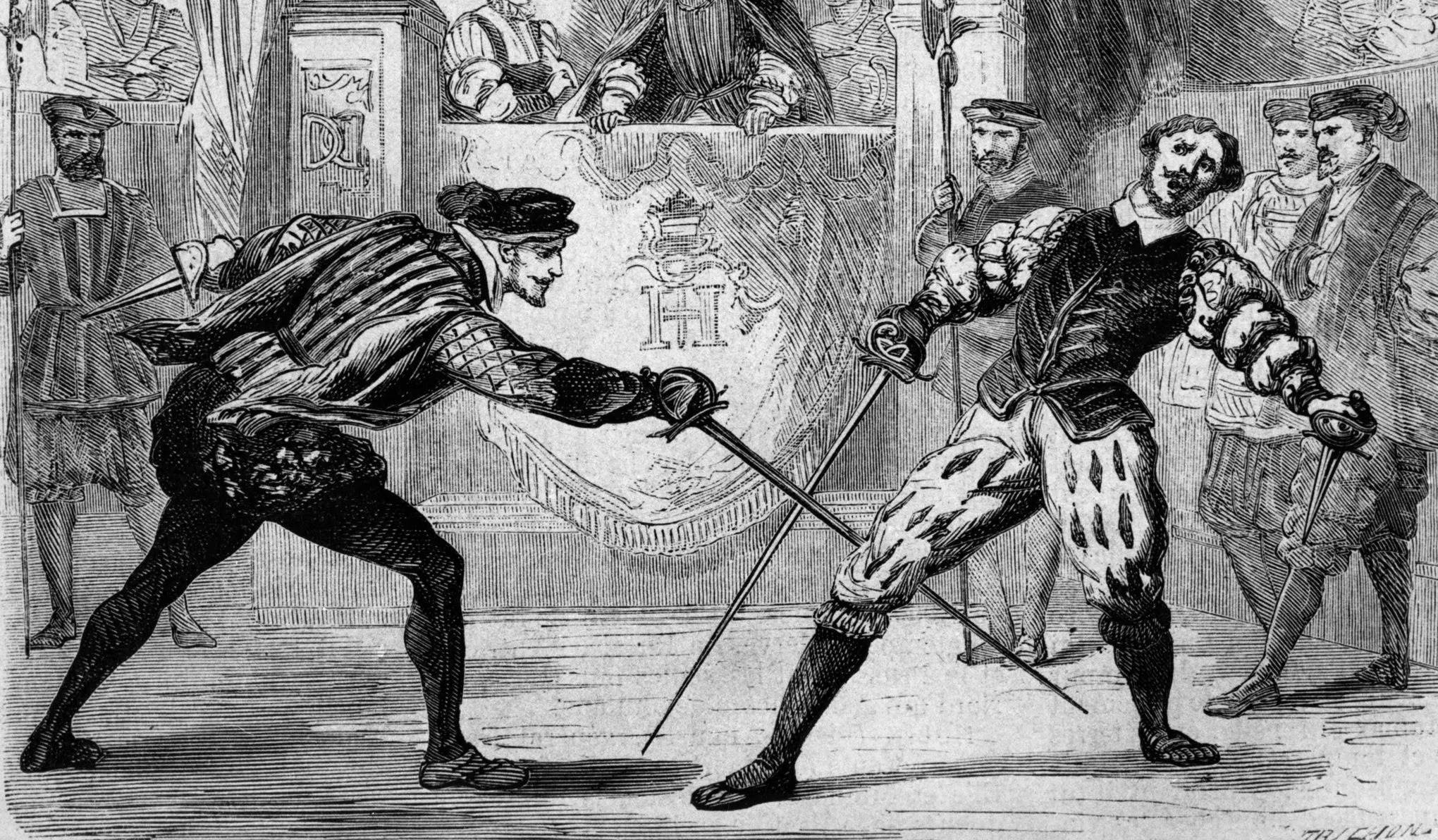
One of the most memorable confrontations in our history is undoubtedly the Duel of Jarnac.
In the arena of honor, beneath the clear sky of Saint-Germain-en-Laye, stand two figures of the French nobility destined to etch their conflict into French history.
On one side, La Châtaigneraie, a renowned swordsman and friend of the king, imposing and self-assured. On the other, Jarnac, a minor baron mocked by some for his less-than-stellar reputation in the art of fencing.
The quarrel between the two men began with rumors concerning Jarnac's mother. La Châtaigneraie spread a rumor that Jarnac's mother was a libertine, notably having an affair with King Francis I.
Outraged, Jarnac demands satisfaction for the honor of his family.
The king hears Jarnac's grievance and authorizes the duel, which he will attend with his court in 40 days, making this fight a major event of the era.
La Châtaigneraie, whose reputation was beyond reproach, is widely expected to emerge victorious. But the duel takes an unexpected turn.
As the swords clash, creating a metallic melody that only fate could compose, Jarnac, with the cunning of a fox, waits for his moment. In an unorthodox move, he executes a secret trick learned in tavern brawls. In a flash of steel, his blade finds its way beneath his opponent's knee, where the protection was lacking. This move, unexpected in its execution and brutality, brings La Châtaigneraie to his knees, not only physically but also in his pride.
The ensuing silence is as profound as the shock. The king, the court, and the spectators all witness an epic reversal of fortune, where the underdog prevails, not by chance, but through bold strategy and street-fighting savvy.
Ashamed to have lost before the king, La Châtaigneraie dies a few days later, and the rumors about Jarnac's mother die with him.
This Jarnac move, although it secured the victory, gave rise to a new expression in popular language to describe an unexpected, even underhanded, act.
The duel, although it left us with fascinating stories, also decimated the young French nobility and many men of merit, such as the brilliant mathematician Évariste Galois, ultimately leading to its ban.
Despite the abolition of dueling, the need to prepare to defend oneself in the event of an attack remains highly relevant. In our society, physical challenges often take a different form; being fit and ready to physically defend oneself is more relevant than ever.
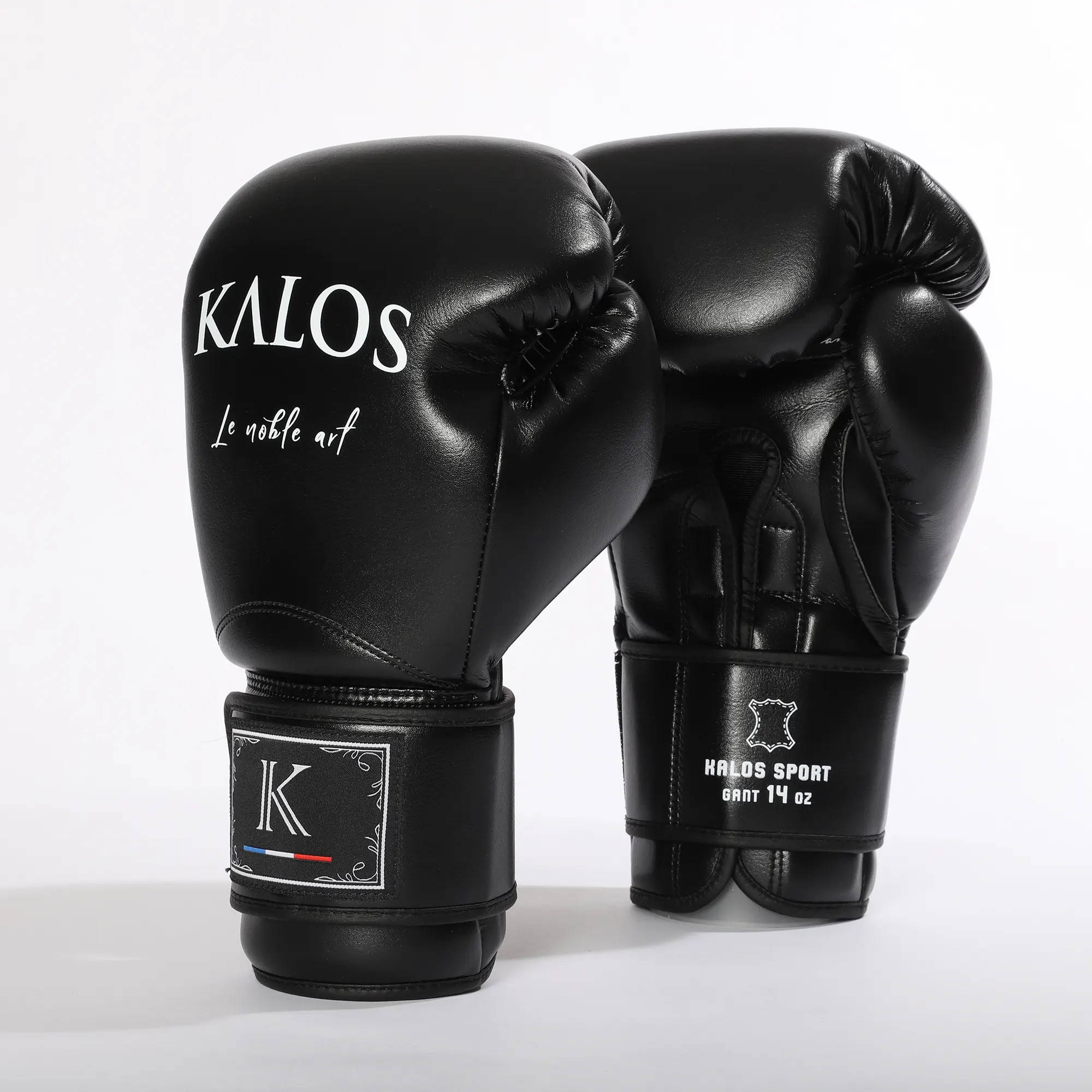
It is in this spirit of preparation and resilience that we wish to support you. To help you on this quest, we are pleased to offer our range of boxing and MMA equipment.
Whether you are a beginner or an advanced practitioner, our equipment is designed to help you achieve your fitness and self-mastery goals. Take advantage of this opportunity to strengthen yourself mentally and physically.
With determination and support,
The Story of Kalos "Sport seeks out fear to overcome it, fatigue to triumph over it, and difficulty to defeat it." - Pierre de Coubertin During these luminous days of...

SAINTE JEANNE D'ARC Two months ago, you discovered our “Vox Dei” ring, inspired by the one Joan herself wore. Many of you chose it, not as a mere piece of...

TO OUR HEROES "Difficulty attracts the man of character, for it is by embracing it that he realizes himself." - Charles de Gaulle Eighty years ago, World War II ended...
 France
|
EUR
€
You are currently shipping to France and your order will be billed in EUR €.
 Afghanistan
EUR
€
 Åland Islands
EUR
€
 Albania
ALL
L
 Algeria
DZD
د.ج
 Andorra
EUR
€
 Angola
EUR
€
 Anguilla
XCD
$
 Antigua & Barbuda
XCD
$
 Argentina
EUR
€
 Armenia
EUR
€
 Aruba
AWG
ƒ
 Ascension Island
SHP
£
 Australia
AUD
$
 Austria
EUR
€
 Azerbaijan
EUR
€
 Bahamas
BSD
$
 Bahrain
EUR
€
 Bangladesh
EUR
€
 Barbados
BBD
$
 Belarus
EUR
€
 Belgium
EUR
€
 Belize
EUR
€
 Benin
EUR
€
 Bermuda
USD
$
 Bhutan
EUR
€
 Bolivia
BOB
Bs.
 Bosnia & Herzegovina
BAM
КМ
 Botswana
EUR
€
 Brazil
EUR
€
 British Indian Ocean Territory
USD
$
 British Virgin Islands
USD
$
 Brunei
BND
$
 Bulgaria
EUR
€
 Burkina Faso
EUR
€
 Burundi
BIF
Fr
 Cambodia
EUR
€
 Cameroon
XAF
CFA
 Canada
CAD
$
 Cape Verde
CVE
$
 Caribbean Netherlands
USD
$
 Cayman Islands
KYD
$
 Central African Republic
XAF
CFA
 Chad
XAF
CFA
 Chile
EUR
€
 China
EUR
€
 Christmas Island
AUD
$
 Cocos (Keeling) Islands
AUD
$
 Colombia
EUR
€
 Comoros
KMF
Fr
 Congo - Brazzaville
XAF
CFA
 Congo - Kinshasa
CDF
Fr
 Cook Islands
NZD
$
 Costa Rica
CRC
₡
 Côte d’Ivoire
EUR
€
 Croatia
EUR
€
 Curaçao
ANG
ƒ
 Cyprus
EUR
€
 Czechia
CZK
Kč
 Denmark
DKK
kr.
 Djibouti
DJF
Fdj
 Dominica
XCD
$
 Dominican Republic
DOP
$
 Ecuador
USD
$
 Egypt
EGP
ج.م
 El Salvador
USD
$
 Equatorial Guinea
XAF
CFA
 Eritrea
EUR
€
 Estonia
EUR
€
 Eswatini
EUR
€
 Ethiopia
ETB
Br
 Falkland Islands
FKP
£
 Faroe Islands
DKK
kr.
 Fiji
FJD
$
 Finland
EUR
€
 French Guiana
EUR
€
 French Polynesia
EUR
€
 French Southern Territories
EUR
€
 Gabon
EUR
€
 Gambia
GMD
D
 Georgia
EUR
€
 Germany
EUR
€
 Ghana
EUR
€
 Gibraltar
GBP
£
 Greece
EUR
€
 Greenland
DKK
kr.
 Grenada
XCD
$
 Guadeloupe
EUR
€
 Guatemala
GTQ
Q
 Guernsey
GBP
£
 Guinea
GNF
Fr
 Guinea-Bissau
EUR
€
 Guyana
GYD
$
 Haiti
EUR
€
 Honduras
HNL
L
 Hong Kong SAR
HKD
$
 Hungary
HUF
Ft
 Iceland
ISK
kr
 India
EUR
€
 Indonesia
IDR
Rp
 Iraq
EUR
€
 Ireland
EUR
€
 Isle of Man
GBP
£
 Israel
ILS
₪
 Italy
EUR
€
 Jamaica
JMD
$
 Japan
JPY
¥
 Jersey
EUR
€
 Jordan
EUR
€
 Kazakhstan
EUR
€
 Kenya
KES
KSh
 Kiribati
EUR
€
 Kosovo
EUR
€
 Kuwait
EUR
€
 Kyrgyzstan
EUR
€
 Laos
LAK
₭
 Latvia
EUR
€
 Lebanon
EUR
€
 Lesotho
EUR
€
 Liberia
EUR
€
 Libya
EUR
€
 Liechtenstein
CHF
CHF
 Lithuania
EUR
€
 Luxembourg
EUR
€
 Macao SAR
EUR
€
 Madagascar
EUR
€
 Malawi
EUR
€
 Malaysia
EUR
€
 Maldives
MVR
MVR
 Mali
EUR
€
 Malta
EUR
€
 Martinique
EUR
€
 Mauritania
EUR
€
 Mauritius
MUR
₨
 Mayotte
EUR
€
 Mexico
EUR
€
 Moldova
MDL
L
 Monaco
EUR
€
 Mongolia
MNT
₮
 Montenegro
EUR
€
 Montserrat
XCD
$
 Morocco
EUR
€
 Mozambique
EUR
€
 Myanmar (Burma)
EUR
€
 Namibia
EUR
€
 Nauru
AUD
$
 Nepal
NPR
Rs.
 Netherlands
EUR
€
 New Caledonia
EUR
€
 New Zealand
NZD
$
 Nicaragua
NIO
C$
 Niger
EUR
€
 Nigeria
EUR
€
 Niue
NZD
$
 Norfolk Island
AUD
$
 North Macedonia
MKD
ден
 Norway
EUR
€
 Oman
EUR
€
 Pakistan
EUR
€
 Palestinian Territories
ILS
₪
 Panama
USD
$
 Papua New Guinea
PGK
K
 Paraguay
PYG
₲
 Peru
PEN
S/
 Philippines
PHP
₱
 Pitcairn Islands
NZD
$
 Poland
PLN
zł
 Portugal
EUR
€
 Qatar
QAR
ر.ق
 Réunion
EUR
€
 Romania
RON
Lei
 Russia
EUR
€
 Rwanda
EUR
€
 Samoa
WST
T
 San Marino
EUR
€
 São Tomé & Príncipe
EUR
€
 Saudi Arabia
SAR
ر.س
 Senegal
EUR
€
 Serbia
RSD
РСД
 Seychelles
EUR
€
 Sierra Leone
SLL
Le
 Singapore
SGD
$
 Sint Maarten
ANG
ƒ
 Slovakia
EUR
€
 Slovenia
EUR
€
 Solomon Islands
SBD
$
 Somalia
EUR
€
 South Africa
EUR
€
 South Georgia & South Sandwich Islands
GBP
£
 South Korea
KRW
₩
 South Sudan
EUR
€
 Spain
EUR
€
 Sri Lanka
LKR
₨
 St. Barthélemy
EUR
€
 St. Helena
SHP
£
 St. Kitts & Nevis
XCD
$
 St. Lucia
XCD
$
 St. Martin
EUR
€
 St. Pierre & Miquelon
EUR
€
 St. Vincent & Grenadines
XCD
$
 Sudan
EUR
€
 Suriname
EUR
€
 Svalbard & Jan Mayen
EUR
€
 Sweden
SEK
kr
 Switzerland
CHF
CHF
 Taiwan
TWD
$
 Tajikistan
TJS
ЅМ
 Tanzania
TZS
Sh
 Thailand
THB
฿
 Timor-Leste
USD
$
 Togo
EUR
€
 Tokelau
NZD
$
 Tonga
TOP
T$
 Trinidad & Tobago
TTD
$
 Tristan da Cunha
GBP
£
 Tunisia
EUR
€
 Türkiye
EUR
€
 Turkmenistan
EUR
€
 Turks & Caicos Islands
USD
$
 Tuvalu
AUD
$
 U.S. Outlying Islands
USD
$
 Uganda
EUR
€
 Ukraine
EUR
€
 United Arab Emirates
AED
د.إ
 United Kingdom
GBP
£
 United States
USD
$
 Uruguay
UYU
$U
 Uzbekistan
EUR
€
 Vanuatu
VUV
Vt
 Vatican City
EUR
€
 Venezuela
USD
$
 Vietnam
VND
₫
 Wallis & Futuna
EUR
€
 Western Sahara
EUR
€
 Yemen
YER
﷼
 Zambia
EUR
€
 Zimbabwe
USD
$